



User interviews are one of the most reliable ways to understand your audience during market and product research. While analytics tools show what users do, they do not explain why they do it. That is where user interviews become valuable.
By speaking directly with users, product managers can uncover the real motivations, frustrations, and expectations that people have in order to make a better product or to be able to market your existing product to the demographic. All the information you gain from user interviews helps you make better decisions about your business or marketing strategy.
In this guide, you will learn what user interviews are, why they matter, how to conduct them step by step, and how to turn these raw conversations into clear insights.
What Are User Interviews?
User interviews are conversations with people who use or may use your product or service. They can be structured or semi-structured. The goal is to understand their experiences, needs, and challenges in their own words.
Unlike surveys, which often limit responses, interviews let you explore certain questions more deeply. You can ask follow-up questions, clarify answers, and explore unexpected topics that come up during the conversation.
For example, instead of asking “Do you like this feature?” in a survey, you can ask in an interview: “Can you show me how you use this feature?” This gives you more accurate and useful information.
In simple terms, user interviews help you go from guessing what users want to actually knowing what they need.

Benefits of User Interviews
User interviews let you gain insights that are difficult to capture through data analytics alone. They help you understand the context behind user actions, which is essential for making informed decisions.
When done correctly, interviews help make decisions on how to improve your product, and they help teams stay focused on the user.
Understand User Needs and Behaviors
User interviews help you learn how users think, what they care about, and how they approach tasks.
For example, two users may complete the same task but for completely different reasons. Interviews reveal these differences, helping you design better solutions.
By studying real user behavior, you can create products that are useful instead of unnecessary and intuitive instead of confusing.
Discover Pain Points
Pain points are the problems or frustrations users face. These are often the most valuable insights you can gather. Pains are what your product or service can provide a solution for.
For instance, a user might say they spend too much time switching between tools. This signals an opportunity to simplify workflows or integrate features.
Identifying pain points helps you focus on solving real problems instead of adding features that users do not need.
Validate Assumptions
Teams often make decisions based on assumptions or opinions that are internal to the company. User interviews help test whether those assumptions are correct.
For example, you may believe users want more features, but interviews might reveal they actually want a simpler interface.
Validating assumptions early saves time, money, and effort in the long run.
Improve Products and Services
Insights from interviews can guide everything from product design to marketing messaging.
If users consistently describe your product in a certain way, you can use that language in your marketing. If they struggle with a feature, you can improve it.
This makes your product more aligned with user expectations and easier to use.

Types of User Interviews
There are a few different types of user interviews that serve different purposes depending on how much structure you need and what you want to learn, as well as a way of categorizing types based on location or setup.
Choose the right type of user interview and prepare for it accordingly.
Structured Interviews
Structured interviews follow a fixed script with the same questions asked in the same order.
This approach to user interviews is useful when you want to compare answers across many users. For example, it works well in large research studies. However, it limits your ability to explore unexpected insights in-conversation, which can reduce the depth of your findings.
Semi-Structured Interviews
Semi-structured interviews use a prepared list of questions but allow for some flexibility.
You can ask follow-up questions based on user responses, which leads to deeper insights.
This is the most widely used method.
Unstructured Interviews
Unstructured interviews are open conversations without a strict script.
They are useful in early research when you are exploring a topic and do not yet know what to ask. However, they require more skill and can be harder to analyze because responses vary widely.
Remote User Interviews
Remote user interviews are conducted through video or audio calls.
A remote setup of course allows you to reach users in different locations, reduce costs, and make scheduling easier.
For example, you can interview users across multiple countries without travel, which is especially useful for global products.
Online User Interviews
Online interviews include chat conversations, recorded responses, or asynchronous formats.
These are helpful when live interviews are not possible or when you need to collect data from many users quickly.
They are flexible, but they may not have the depth of real-time conversations.
When to Conduct User Interviews
User interviews are useful at almost every stage of product development. The key is to keep your goals in mind.
Running interviews at the right time helps you make better decisions and avoid mistakes that can cost you.
- Before building a product, interviews help you understand user needs and define the problem.
- During development, they help you test ideas and refine features.
- After launch, they help you identify issues and improve the user experience.
For example, if users are not adopting a feature, interviews can reveal whether the problem is usability or lack of awareness. Use interviews throughout the product lifecycle and use them correctly.

How to Conduct User Interviews
In order to conduct effective user interviews you need to prepare and structure your interview process. Without a clear process, interviews can become unfocused and eventually difficult to analyze.
Follow a step-by-step approach to interviews to ensure that you collect useful and reliable insights.
Define Research Objectives
Start by clearly defining what you want to learn.
For example, your objective might be:
“Understand why users stop using our product after the first week.”
A clear objective helps you stay focused and ensures your questions are relevant.
Recruit the Right Participants
Participants should match your target audience or user persona.
For example, if your product is designed for HR managers, interviewing students will not give useful insights.
Recruiting the right users ensures your findings reflect real needs and behaviors.
Create a User Interview Plan
A user interview plan outlines your goals, questions, timeline, and tools.
It also helps align your team and ensures consistency across interviews. A good plan makes the process smoother and more efficient.
Choose the Interview Format
Decide whether to conduct interviews in person, remotely, or online.
Each format has advantages. In-person interviews allow observation, while remote interviews are more scalable.
Choose the format that best fits your research goals.
Schedule Interviews Efficiently
Scheduling interviews can be time-consuming if done manually.
Using scheduling tools reduces back-and-forth communication and improves participation rates. Efficient scheduling is especially important when working with multiple participants.
Prepare Interview Materials
Prepare your questions, recording tools, and any supporting documents.
You may also need consent forms to ensure participants agree to being recorded.
Preparation helps interviews run smoothly and professionally.
Conduct the Interview
During the interview, focus on listening rather than speaking.
Ask open-ended questions like “Can you describe your experience?” instead of yes/no questions.
Allow pauses and give users time to think. This often leads to more thoughtful answers.
Record and Document Responses
Recording interviews ensures you do not miss important details.
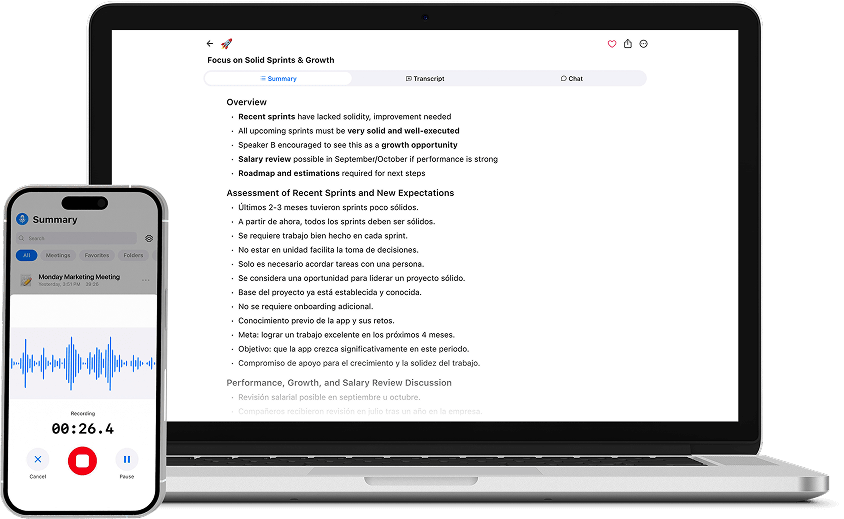
Instead of taking notes manually, you can use Summary AI’s AI Note Taker to record, transcribe, and organize conversations automatically. This allows you to focus fully on the user while keeping accurate records.
User Interview Questions
The quality of your user interviews depends heavily on the questions you ask. Poor questions lead to unclear or biased answers.
Well-designed questions help you uncover real insights and meaningful patterns.
Opening Questions
Opening questions help build rapport and make users feel comfortable.
Examples include: “Can you tell me about your role?” or “What tools do you use daily?”
These questions provide context and make it easier to move into deeper topics.
Behavioral Questions
Behavioral questions focus on real actions rather than opinions.
For example: “Can you walk me through the last time you used this tool?”
These questions are more reliable because they are based on actual experiences.
Problem-Focused Questions
These questions explore challenges and frustrations.
For example: “What is the most difficult part of this process?”
They help you identify opportunities for improvement and innovation.
Workflow Questions
Workflow questions examine how users complete tasks step by step.
For example: “What steps do you take from start to finish?”
Understanding workflows helps you identify inefficiencies and improve usability.
Closing Questions
Closing questions allow users to share anything you may have missed.
For example: “Is there anything else you would change?”
These questions often reveal valuable insights that structured questions do not capture.

User Interview Analysis
User interview analysis is where insights are created. Without proper analysis, interviews remain just conversations.
A structured approach helps you turn raw data into clear, actionable findings.
Organize Interview Notes
Start by collecting all notes, recordings, and transcripts in one place. You can also transcribe audio to text to make reviewing easier. Good organization saves time and improves accuracy.
Identify Recurring Themes
Look for patterns that appear across multiple interviews.
For example, if many users mention the same frustration, it is likely a key issue.
Recurring themes help you prioritize what matters most.
Affinity Mapping
Affinity mapping involves grouping similar insights together.
For example, you might group all comments related to onboarding issues.
This helps you visualize patterns and connections.
Coding Responses
Coding means labeling responses with categories such as “pain point” or “feature request.”
This makes it easier to sort and analyze large amounts of data.
It also helps teams collaborate and stay consistent.
Turning Insights into Actionable Recommendations
The final step is turning insights into clear actions.
For example, if users struggle to find a feature, you might improve navigation or add onboarding guidance.
Clear recommendations ensure your research leads to real improvements.
Common Mistakes to Avoid
Even well-planned interviews can produce poor results if common mistakes are not avoided. Understanding these mistakes helps you improve the quality of your research.
Asking Biased Questions
Biased questions can lead users toward a specific answer.
For example, asking “Do you like this feature?” suggests a positive response.
Neutral questions lead to more honest and useful feedback.
Interviewing the Wrong Users
If participants do not match your target audience, your insights will not be relevant.
Always define your audience clearly before recruiting participants.
Talking Too Much
The goal is to understand the user, not explain your product.
Let users speak and avoid interrupting or guiding their answer.
Ignoring Non-Verbal Feedback
Non-verbal cues such as hesitation or tone can reveal uncertainty or frustration. Pay attention to these signals, especially in video interviews.
Drawing Conclusions from Too Few Interviews
A small number of interviews may not represent your full audience. Conduct enough interviews to identify patterns and avoid misleading conclusions.
Transcribe interviews with Summary AI
User interviews are one of the most effective tools for understanding your users. They provide deep insights that help you build better products and make smarter decisions.
By following a structured process and asking the right questions, you can turn simple conversations into valuable research.
To make the process easier and more efficient, tools like Summary AI’s AI Note Taker can help you record, transcribe, and organize interviews automatically, so you can focus on listening and learning.