

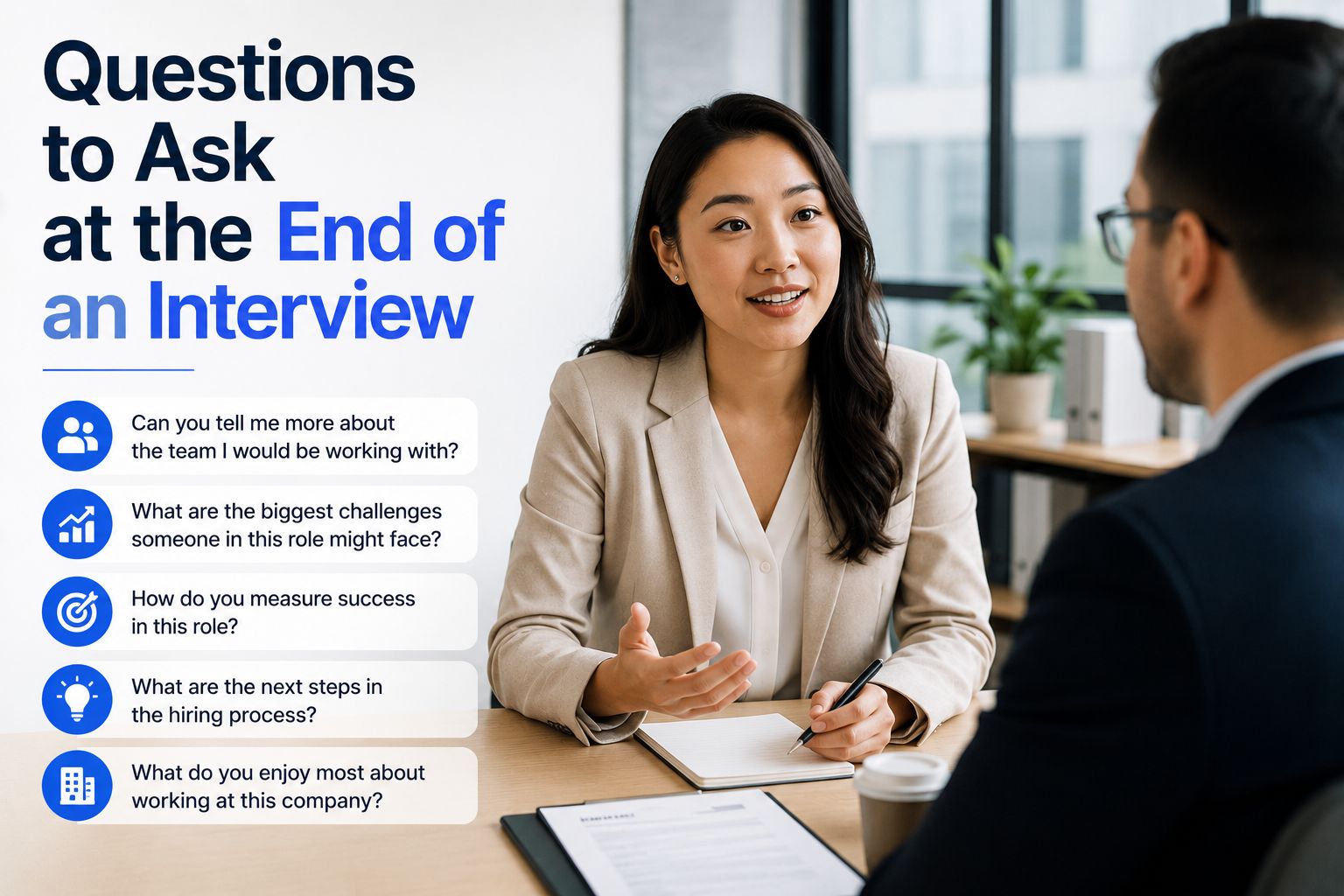
At the end of an interview, the hiring manager will often ask, “Do you have any questions for us?” If you want to make the most of the interview, your answer should almost always be yes.
When you ask good questions at the end of an interview it shows that you prepared and that you care about the role. Asking questions signals that you want to know how you can do well, which means shows initiative and makes a great first impression. Asking questions is also important for you as a candidate because they help you find out whether the job, your future manager, and the company are right for you.
You do not need to ask every question in this guide. On the contrary! You should limit your questions by picking three to five questions that fit the role and the way the interview goes. Listen closely during the conversation so you do not ask something the interviewer has already covered.
When to Ask Questions at the End of the Interview

Most interviewers leave time for questions at the end of the interview. The recruiter may say something along the lines of, “What questions do you have for me?” or “Is there anything else you would like to know?”
This is the best time to ask questions about the role, the team, the company, and even next steps, although recruiters usually cover those automatically. Although this is the best time to ask what you want, that doesn’t mean you necessarily have to wait until the end of the interview if a question naturally comes up during the conversation. For example, if the interviewer talks about a big project, you can ask a short follow-up question about it.
However, it is a good idea to save a few strategic questions for the end of the interview. Make sure you leave enough time to ask them. If the interview is almost over, choose two questions instead of rushing through a long list.
If the interviewer answers all your planned questions, you can also say something like:
“Thank you, you have already covered many of the things I wanted to ask. Could I ask what success would look like in the first few months in this role?”
That question works in most interviews and helps you end on a strong note. It is a good backup question for most scenarios you will find yourself in during an interview.
Why You Should Ask Questions at the End of the Interview
Asking questions at the end of an interview is not only about making a good impression. It is also your chance to learn what the job is really like.
A job title does not tell you everything. Two companies can post the same role but have very different needs, work styles, goals, and expectations.
The best questions to ask in an interview can help you:
- Understand what you would do each day
- Learn what the team needs from the person they hire
- Find out how the manager leads and gives feedback
- See whether the company culture fits your work style
- Learn about growth, training, and career paths
- Show that you are serious about doing good work
- Decide whether you want the job if you get an offer
Always remember when formulating your questions that an interview is a two-way conversation. The company is trying to find the right person for the role, but you are also trying to find the right place to work.

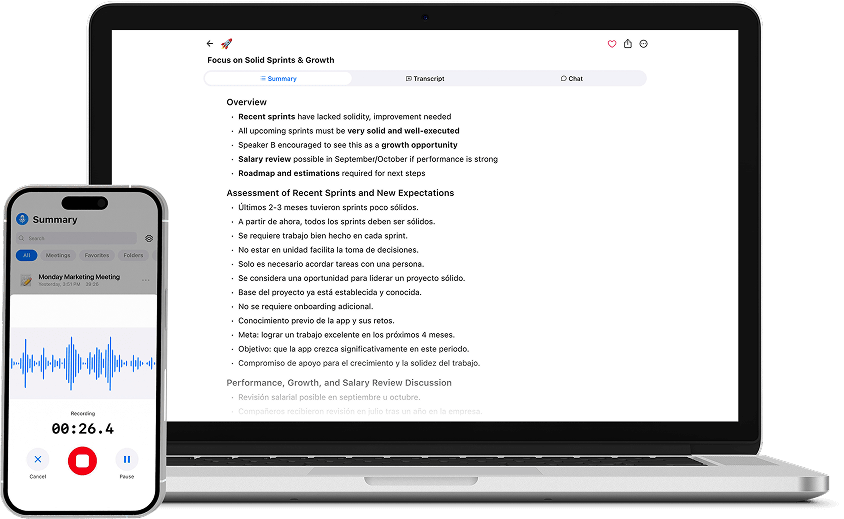
If you have many interviews a day, taking notes manually is probably not an option. You may know how to type fast, but if you are focused on taking notes, you will not be able to focus on the conversation, even with the best note taking methods. The most helpful thing can be to use an AI Note Taker to record what you discuss. Summary AI can join your meetings and trancribe everything with AI, then generate the perfect summary so you never miss a thing.
List of Questions to Ask at the End of the Interview
Below are more than 50 questions to ask an interviewer. Read through them before your interview and write down the ones that matter most to you.
Common Questions to Ask at the End of an Interview
These common questions are safe choices for almost any job interview. They help you learn more without sounding too personal or too direct.
- What does a typical day look like in this role?
- What are the main goals for the person in this position?
- What are the biggest tasks I would take on in the first few months?
- What skills are most important for someone to do well in this role?
- What are the biggest challenges in this position?
- Why is this position open?
- What does the team look like?
- Who would I work with most often?
- Who would I report to?
- How does this role work with other teams?
- What tools or systems does the team use every day?
- What does the hiring process look like from here?
- When do you hope to make a hiring decision?
- Is there anything else you need from me?
- Is there anything in my background that you would like me to explain more?
The last question can be especially helpful for interviews. It gives you a chance to clear up any worries the interviewer may have before the interview ends.
Important Questions to Ask at the End of an Interview
Important questions help you understand how your work will be judged. They can also help you learn whether the company has clear goals for the role.
- What would success look like after 30, 60, and 90 days?
- How do you measure success in this role?
- What are the most important goals for this team this year?
- What problems do you hope the new hire will help solve?
- What would be the top priority in the first week?
- What are the biggest projects this person would work on?
- What has made people successful in this role in the past?
- What has made this role hard for people in the past?
- How often would I get feedback on my work?
- How do managers set goals with their team members?
- What kind of training or onboarding does the company offer?
- How does the team handle changes in priorities?
- What does the team need most from the person you hire?
- Are there any big changes coming up that could affect this role?
- What would you want the new hire to improve or build up first?
These questions are useful because they move past general talk. They help you picture what you would actually need to do after you start.
Appropriate Questions to Ask at the End of an Interview
Appropriate questions show that you want to understand the company in a thoughtful way. They are a good fit when you speak with a manager, recruiter, or future teammate.
- How would you describe the company’s work culture?
- What do you enjoy most about working here?
- How does the company support teamwork?
- How does the team share ideas and give feedback?
- How does the company support learning and career growth?
- Are there chances to take on new projects over time?
- How does the company support work-life balance?
- How does the team stay in touch when working remotely or across different locations?
- How does the company help new employees feel part of the team?
- How would you describe the manager’s leadership style?
- How does the team celebrate good work or big wins?
- What does the company do to make people feel included?
- How would you describe the pace of work on this team?
- How often does the team meet?
- What is one thing you wish you had known before joining the company?
Question 45 is a good one because it can help you spot things that may not come up in the job description.

Excellent Questions to Ask at the End of an Interview
Excellent questions show that you have listened to the interviewer and thought about how you could help. Change the wording so the question fits what you discussed.
- You mentioned that the team is working on a project. What would be the most helpful way for this role to support that work?
- Based on what we have talked about, what would you want the person in this role to focus on first?
- What does the team need now that it did not need a year ago?
- How do you see this role changing as the company grows?
- What would make you feel confident that you hired the right person?
- What is the biggest chance for growth on the team right now?
- What is the hardest goal the team is trying to reach this year?
- What parts of the job are likely to change most over the next year?
- How does the team use customer feedback in its work?
- What does great teamwork look like here?
- How do people on the team help each other when workloads build up?
- When I join, what can I do to make your work easier?
- What would you hope I bring to the team that it does not already have?
- What is the most rewarding part of leading this team?
- What is one thing the team could improve in the next six months?
These are great questions to ask at the end of an interview because they focus on the future. They show that you are already thinking about how to add value.
Killer Questions to Ask at the End of an Interview
Be careful with gotchu questions! Your “killer questions” should not sound like a trick. The best ones are clear and useful for understanding the role. Ask them only when they fit the conversation.
- What are the most important business goals behind this role?
- If I started tomorrow, what would be the first problem you would want me to help solve?
- What would set apart a good performer from a great performer in this role?
- What skills or habits do your strongest team members share?
- What risks or roadblocks could make it harder for the new hire to succeed?
- How does this team make decisions when people do not agree?
- How much freedom would this person have to suggest new ideas or improve processes?
- What does the team need to stop doing, start doing, or do better?
- How does leadership share company goals and changes with employees?
- What would make you excited to work with the person you hire?
- Is there a question you wish more candidates asked?
- Before we wrap up, do you have any concerns about my fit for the role that I could speak to now?
The final question, question #72 is one of the best questions to ask at the end of an interview. It takes confidence, but it may give you a chance to explain a career change, a gap in your work history, or a skill you have not yet discussed.

How to Ask Questions at the End of an Interview
Knowing what questions to ask is helpful, but how you ask them matters too. Keep your tone warm and curious, but professional at the same time.
Start by thanking the interviewer for their time
Then say that you have a few questions. You can use a simple line like:
“Thank you for walking me through the role. I have a few questions that would help me better understand the team and what success looks like.”
Choose questions based on who is interviewing you
Ask a recruiter about the hiring process, job level, pay range if it has not been shared, benefits, work setup, and company-wide culture
- Ask a hiring manager about goals, projects, team needs, feedback, and success in the role
- Ask a future teammate about daily work, team communication, tools, workload, and how people work together
- Ask a more senior lead about the company’s direction, growth plans, business goals, and how the role supports those goals
Do your research
Try not to ask questions that a quick visit to the company website could answer. For example, “What does your company do?” may make it seem like you did not prepare at all, obviously. But it all depends on the phrasing.
Ask about compensation later in the interview
You should also avoid leading with benefits, time off, perks, or working from home unless those details have a major effect on whether you can actually take the job. These topics are completely fair to bring up, but it is often better to first show interest in the work itself and then get to compensation in the second half of the interview.
A few more tips
- Bring a short list of questions with you
- Pick three to five questions before the interview
- Do not ask every question on your list
- Listen for answers that cover your planned questions
- Ask follow-up questions when something interests you
- Keep questions short and easy to understand
- Take brief notes if the setting allows it
- End by thanking the interviewer again
If you only have time for two questions, ask about success in the role and the next steps.
For example:
- “What would success look like in the first 90 days?”
- “What are the next steps in the interview process?”
Those two questions come up often in LinkedIn guides on interviewing candidates are professional and easy to adapt to almost any interview, and they are useful to you.
Take Notes During Interviews with Summary AI
Interviews can move quickly. You may hear important details about the job, team goals, company culture, or next steps, but forget parts of the conversation later.
That’s why you should use an AI Note Taker for interviews. With Summary AI, you can turn interview recordings into clear transcripts and notes.
This can help you look back at what each interviewer said, compare different job opportunities, and spot the details that matter most to you.