

AI translation has come a long way in the last few years. In the past, online translation tools often gave results that lacked the kind of coherence we have come to expect. They could translate the words, but they did not always conserve what a person was really trying to say. Thanks to AI, that has started to change.
AI translation is much better at understanding how words fit together and what a sentence means. The result often sounds much more natural and is easier to understand even the context and subtext of what is being said. It can also work very quickly, which makes it useful when people need to understand another language right away, like during a meeting, for example.
Language can easily become a barrier between people. Good translation makes it easier to share ideas and understand what someone else means, even when you do not speak the same language. It can help people feel more included and make communication much simpler, which is important when people from different cultural backgrounds work together.
So, what is AI translation, how does it work, and when can you trust it? Understanding the basics can help you use these tools with more care, check their work, and avoid translation mistakes that could cause problems.
What is AI translation?

AI translation uses artificial intelligence to translate from one language into another. It can work with both written and spoken text.
Older translation tools often worked word by word. That could lead to sentences that sounded strange or missed the real meaning. Newer AI translation tools work differently. They look at the sentence as a whole and try to understand the context behind what the person means before giving a translation.
This is important because, of course, language is not always direct. A phrase can mean something very different in different scenarios, just like, for example, “break the ice” does not really mean breaking ice. A good AI translation tool should understand that and translate the idea, preserving the meaning, not just translating the words literally.
AI translation is also useful because it can be used in a large variety of situations to translate a webpage full of text, follow spoken language during a meeting, or help someone understand a conversation in person as it happens in real time.
Types of AI translation
Different types of translation tools work in different ways. Some use older methods, while newer ones use AI to better understand how language works. In this section, we’ll go through some of the ways translation works so you have a better understanding of where AI comes into play.
- Rule-based translation: This is one of the older methods. It uses grammar rules and dictionary matches to translate words and sentences. It can work well in some cases, but the result may sound stiff or unnatural with longer text.
- Statistical machine translation: This method looks at large amounts of translated text and uses patterns to decide which translation is most likely to be right. It can give better results than rule-based tools, but it can still miss the meaning of a sentence.
- Neural machine translation: NMT looks at the whole sentence instead of translating one word at a time. This helps it understand how words connect and usually leads to more natural translations. It is used in many translation tools today.
- Generative AI translation: Newer AI tools can translate a message while also following simple instructions about how it should sound. For example, you can ask for a translation that is more friendly, simple, or formal.
- Speech translation: This type of translation works with spoken language. It listens to what someone says, translates it, and can show the result as text or play it back in another language.
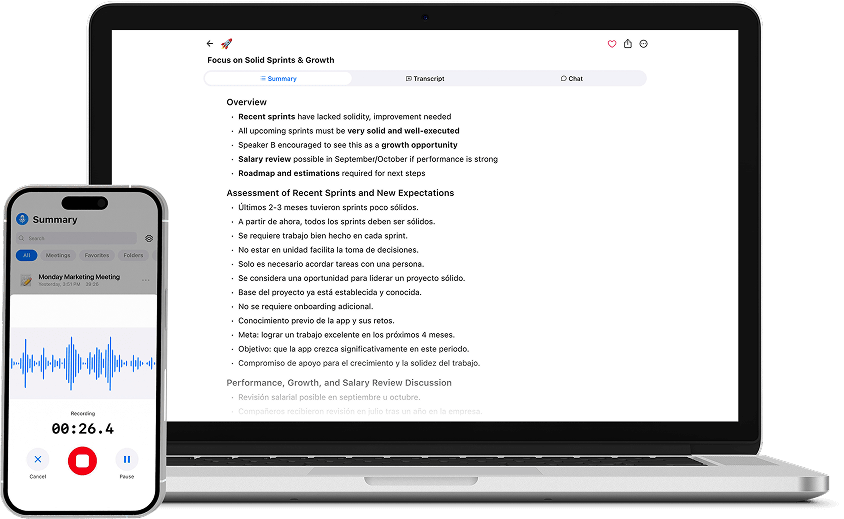
AI translation tools like Summary AI use speech translation when they join your call to translate what is being said in real time. That way you can read what others are saying as captions that appear on screen in your language, making it easier for people from different countries and cultures to work together, especially if you don’t speak a common language.
How AI translation works
AI translation works by looking at language, working out the meaning, and then putting that meaning into another language. It does more than replace one word with another.

For text, the tool reads the original sentence and looks at how the words fit together. It uses the full sentence to understand the meaning, then creates a new sentence in the other language.
For speech, there is an extra step. The tool first turns the spoken words into text. It then translates the text and may show the result as captions or play it back as spoken audio.
A simple way to think about the process is:
- You type or say something in the original language.
- The tool looks at the words, the sentence, and the context.
- It works out the most likely meaning.
- It creates the same message in another language.
- You check the result and make changes if needed.
AI translation tools learn from large amounts of text in many languages. This helps them understand common ways people write and speak. But they can still struggle when the original message is unclear or includes slang, jokes, names, or special terms.
AI translation features
AI translation tools can do more than translate a few lines of text. Some are made for different use cases. Some work well with documents, while others are better for websites, videos, and some tools can translate meetings live.
Common features include:
- Text translation: Changes short messages or full documents into another language.
- Speech-to-text: Turns spoken words into written text.
- Live captions: Shows translated captions while someone is speaking.
- Live translation: Translates a conversation as it happens.
- Voice output: Reads the translated message out loud, often called text-to-speech.
- Language detection: Works out which language is being used.
- Glossaries: Helps the tool use the right names and special terms, especially useful for technical texts with lots of jargon.
- Translation memory: Keeps repeated words and phrases more consistent.
- Review tools: Lets people check and edit the translation.
These features can save time, but not every tool is right for every job. A platform with tools that work well for a short message may not be the best choice for a live meeting or for translating an important document.
Common uses of AI translation
AI translation is useful in a lot of different situations, but especially when people are trying to work together who do not share a spoken language. It comes in handy when trying to understand something in another language quickly, and you don’t have time to copy-paste text into a translator. It can make information easier to share without waiting for every piece of content to be translated by hand.
Common uses include:
- Translating messages between people who speak different languages.
- Adding subtitles to videos and training content.
- Showing captions during online meetings or live events.
- Translating customer questions and help center support content.
- Making websites or articles in another language.
- Making product information available in more languages.
AI translation can save a lot of time, but it still needs to be used with care. The next section looks at where it works well and where its limits start to matter.
Benefits of AI translation

One of the biggest benefits of AI translation is speed. It can translate a large amount of content in a short time, which helps people understand the main idea without having to wait for a person to translate it.
Other benefits include:
- Faster communication: People can translate messages and updates almost right away.
- Lower costs for simple work: AI can handle basic translation tasks that would otherwise take more time and money.
- More language support: Businesses can offer content in more languages without needing a large translation team.
- Better access in meetings: Live captions and translated transcripts can make meetings easier to follow.
- Easier to use at a larger scale: AI can help translate large amounts of repeated content, such as help pages or product information.
- Help for translators: AI can create a first draft, giving translators more time to focus on meaning and quality.
AI translation is useful, but it can still make mistakes. It may have trouble with:
- Jokes, sarcasm, and phrases that do not have a direct meaning.
- Differences in how the same language is spoken in different places.
- Special words used in fields such as law, medicine, finance, or technology.
- Names and product terms that need to stay exact.
- Long sentences or writing that is not very clear.
Because of this, AI should be used with care for content where a mistake could cause a serious problem. Important legal, medical, safety, or business content should be reviewed by someone who understands both the language and the subject.
AI translation works best as a useful starting point. It can do much of the work quickly, but a person should still check the final result when accuracy really matters.
How to use AI translation
When using AI translation, you will usually get better results if your original text is clear and you check the translation before using it.
Follow these steps for translating things with AI, especially written text:
- Choose the languages: Pick the language you are translating from and the language you want to translate into.
- Keep the original text clear: Use simple words and short sentences. Fix spelling mistakes before you start.
- Give the tool some context: Explain who the translation is for and how it will be used. For example: “Translate this support message into friendly French.”
- Add important terms: Tell the tool which names, job titles, or brand words should stay the same.
- Check the translation: Compare it with the original and look for missing details or wording that does not sound right.
- Get help for important content: If the translation will be shared with customers or includes sensitive information, ask a fluent speaker to check it.
- Keep good translations: Save approved wording so the same terms are used in the same way later.
One useful tip is to avoid translating a very long paragraph all at once. Breaking it into smaller parts makes the translation easier to check and fix.
AI translation for meetings
AI translation can make meetings easier to follow when people speak different languages. Depending on the tool, it can create live captions, translate spoken words, or produce translated notes after the call. Summary AI can translate meetings live into 120+ languages.