






Good note-taking can help you get more value from every meeting. These tips for taking notes in meetings can help you record everything discussed in a clear way. The meeting notes tips in this article can also make your notes easier to read, use, and share after the meeting.
With the right approach to taking notes, your meeting notes can help you save time, stay organized, and make sure important tasks are not missed.
The best note taking tips for meetings
The best meeting notes tips are not about writing down more information. They are about saving the details people will need after the meeting. This includes decisions, open questions, action items, task owners, and due dates.
Use these tips for taking notes in meetings to make your notes clear, useful, and easier to review after any type of meeting.

Tips for taking notes in meetings before the call
Getting ready before a meeting makes it easier to listen and take useful notes. These meeting notes tips can help you start with a clear plan instead of looking at a blank page when the meeting begins.
1. Decide what the notes should do
Before the meeting starts, think about what people should understand or be able to do after reading the notes.
The notes may need to show what is blocking progress, who owns each task, what feedback was given, or what changes were approved. The goal will depend on the meeting.
This is one of the most useful tips for taking notes in meetings because it helps you decide what information is important enough to write down. Knowing what the notes need to do is an important part of learning how to take meeting notes in a useful way.
2. Choose a note taker before the meeting
Do not assume someone else is taking notes. If no one has been chosen, decide who will take notes before the meeting begins.
The person leading the meeting often needs to focus on the discussion. Having another person take notes makes it easier to record decisions, questions, and follow-up tasks. Choosing a note taker early can also reduce the chance of missing important details.
This is one of the simplest meeting notes tips for making sure someone is responsible for keeping a clear record.
3. Start with the purpose of the meeting
Write one short sentence at the top of the page that explains why the meeting is happening.
For example:
Purpose: Agree on the launch date and confirm the work that must be finished before launch.
This is one of the best tips for taking notes in meetings because the purpose helps you decide what information matters. If a point does not support the main goal of the meeting, you may not need to write it down in detail.
4. Use the agenda to organize your notes
Add the meeting agenda to your notes before the meeting starts. Use each agenda topic as a heading and write short notes under the right heading during the discussion.
This is one of the easiest meeting notes tips to follow. It keeps your notes in the same order as the meeting and makes the information easier to read later.
If there is no agenda, write down the main topics as they come up.
5. Use the same format for regular meetings
Using the same format each time can make note taking faster and easier. People will also know where to look for the information they need. There are many note taking methods, but using the same simple structure each time can make your notes faster to create and easier to read.
Your meeting notes template might include:
- Discussion
- Decisions
- Open questions
- Action items
- Next meeting
These tips for taking notes in meetings work better when everyone knows where important information will appear in the notes.
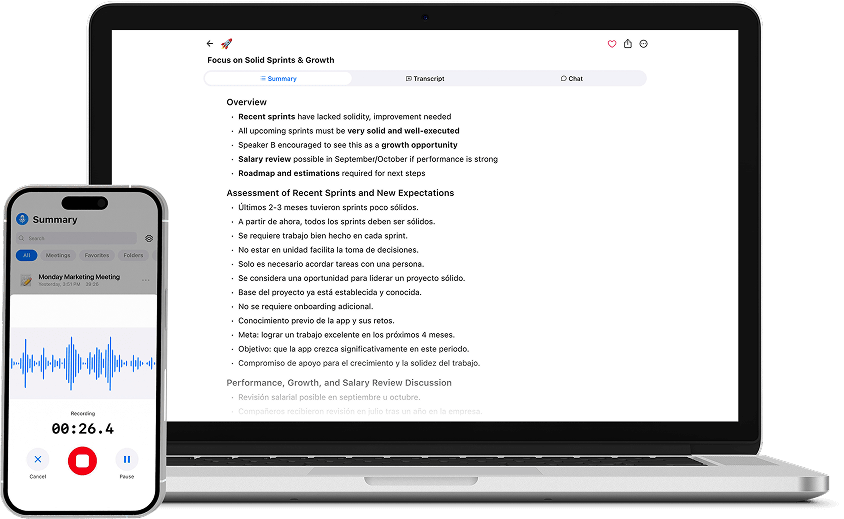
Want to spend less time typing during meetings? Summary AI’s AI Note Taker can record the conversation and help you review the key points, decisions, and action items after the meeting.

Meeting notes tips to use during a meeting
The most useful meeting notes tips during a meeting focus on listening for results. You do not need to write down every word people say. You need a clear record of what was decided and what needs to happen next.
6. Do not try to write every word
One of the most important tips for taking notes in meetings is to avoid writing everything people say. If you spend the whole meeting trying to type every sentence, you may stop paying attention to what the discussion really means.
Use short phrases instead and make a summary instead. Write down what changed, what people agreed on, and what needs more work.
Instead of writing:
“The team talked about whether the launch should happen in late May or early June, and after reviewing the remaining work, most people seemed to prefer June.”
Write:
“Decision: Move the launch to June 3.”
The shorter version is much easier to understand and use later.
7. Listen for words that show a decision
Good meeting notes tips help you notice when the group has reached an agreement.
Listen for phrases such as:
- “We agreed to…”
- “Let’s go with…”
- “The decision is…”
- “We are moving forward with…”
- “Can you take this on?”
- “I can have this ready by…”
When you hear this type of language, write down the result right away. This makes it less likely that an important decision or task will be forgotten.
8. Keep ideas separate from final decisions
People may talk about several ideas before choosing one. Your notes should make it clear which idea was approved.
You can use a simple label:
“Decision: Use the revised onboarding email opening.”
This is one of the most helpful tips for taking notes in meetings because it keeps the notes short and clear. It also helps stop old or rejected ideas from being confused with the final decision.
9. Write down action items right away
Do not wait until the end of the meeting to record action items. Write them down as soon as someone agrees to complete a task.
Each action item should include:
- The task
- One owner
- A due date
For example:
- Action: Send the revised proposal to the client
- Owner: Mia
- Due: Thursday, May 16
One of the most practical meeting notes tips is to always connect a task with a person and a date. Clear ownership makes it easier to follow up and know who is responsible.
10. Keep a place for open questions
Not every question will be answered during the meeting. Some issues may need more information before the group can make a decision.
Mark open questions, risks, and problems clearly so they do not get lost inside the rest of the notes.
For example:
- Open question: Does the client need to approve the revised scope before design starts?
- Next step: Leo will check with the client by Wednesday.
These tips for taking notes in meetings make it easier to see the difference between a final decision and something that still needs an answer.
11. Use short labels when the meeting moves fast
Short labels can help you keep up when people are speaking quickly.
You can use:
- D: Decision
- A: Action item
- Q: Open question
- R: Risk or problem
- FYI: For your information (important info or reminder)
For example:
- D: Move the launch to June 3
- A: Alex to update the project timeline by Thursday
- Q: Need final approval on landing page copy
This is one of the easiest meeting notes tips to use because you can write quickly without losing the most important information.
12. Add links when people share them
If someone shares a file, document, presentation, recording, or project page, add the link to your notes right away.
Do not expect to find it later in a message or email. Put the link next to the topic or task it belongs to. This gives the link useful context and makes it easier for people to find what they need later.
Adding useful links is one of the tips for taking notes in meetings that can save time after the meeting is over.

Tips for following up with meeting notes
Taking notes during the meeting is only part of the work. Good meeting notes tips also include what you should do after the meeting so that decisions lead to action.
13. Clean up the notes soon after the meeting
Review your notes soon after the meeting while you still remember what was discussed. You do not need to rewrite everything. Focus on fixing unclear points and making sure the main results are easy to understand.
Check for:
- Missing task owners
- Missing due dates
- Decisions that are not clear
- Links that still need to be added
- Open questions without a next step
This is one of the most useful tips for taking notes in meetings because a few minutes of cleanup can make the notes much easier for other people to use.
14. Put action items near the top
When you share the notes, do not make people search through the whole document to find their tasks. Put the main decisions and action items near the top of the follow-up message or recap.
For example:
Key decisions
- [Decision]
- [Decision]
Action items
- [Task] | Owner: [Name] | Due: [Date]
- [Task] | Owner: [Name] | Due: [Date]
One of the best tips for taking meeting notes is to make the next steps easy to see. A short summary of decisions and follow-up work can help turn the meeting into real progress.
15. Save all meeting notes in one place
Choose one shared place where people can find meeting notes later. Use clear file names that show the date and meeting topic.
For example:
- 2026-05-14 Product launch weekly meeting
This is one of the most practical tips for taking notes in meetings because people should not have to search in many places for old information. When notes are easy to find, people can check past decisions, review open tasks, and avoid asking the same questions again.
Following these meeting notes tips can also make your notes more useful over time. A simple and clear system helps everyone understand what happened, what was decided, and what needs to happen next. If your team needs a more formal record, it can also help to learn how to write meeting minutes so decisions and actions are saved in a clear format.

Take even better notes with Summary AI
Using these tips for taking notes in meetings can help you keep your notes clear, useful, and easy to follow. The right meeting notes tips also make it easier to track decisions, tasks, and next steps after every meeting.
If you want to spend less time taking notes by hand, Summary AI’s AI Note Taker can help record meetings and turn conversations into clear notes you can review later.