



What is the meaning of meeting minutes? Meeting minutes are a written record of what happened during a meeting. They focus on the key information people need later, such as decisions, votes, agreed actions, and next steps.
Despite the name, meeting minutes are not a word-for-word transcript of everything said. Instead, they summarize what the group decided and agreed to do. Under Robert’s Rules of Order, minutes are meant to record actions taken rather than every comment made by participants.
What does “meeting minutes” mean?
Meeting minutes are notes taken during or after a meeting to create a shared record of the outcome.
The amount of detail depends on the type of meeting. Board minutes may need to record motions and votes, while weekly team minutes may only need decisions, tasks, owners, and deadlines.
The word “minutes” does not refer to minutes on a clock. In this context, it means a short written record of what happened.
A useful set of meeting minutes should answer a few basic questions:
- Who attended?
- What did the group discuss?
- What was decided?
- What needs to happen next?
- Who is responsible for each task?
- When is the next meeting?
- Why are meeting minutes called minutes?
The word “minutes” has long been used to describe a short written record of a meeting or other proceedings. It does not mean someone needs to write something down for every minute that passes.
You may also hear terms such as minutes of the meeting, meeting record, board minutes, or meeting summary.
The wording may change from one organization to another, but the purpose is much the same: to keep a record of what happened and what people agreed to do.
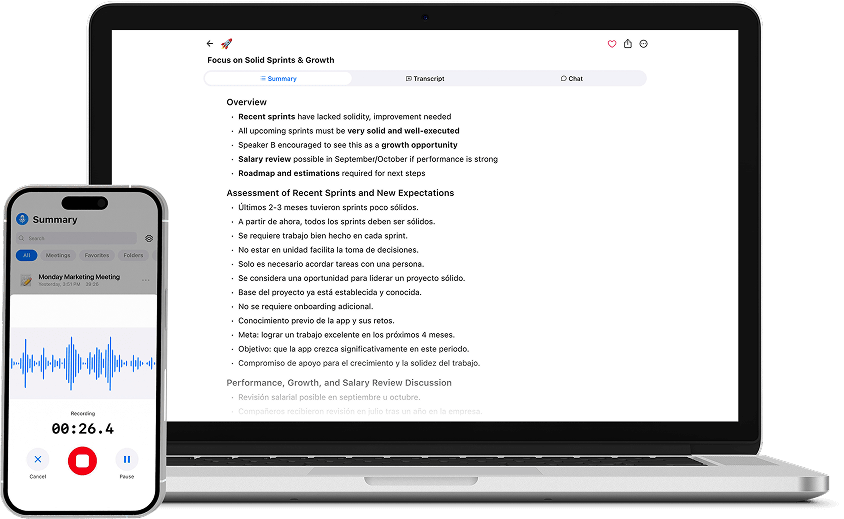
You can also use an AI Note Taker like Summary AI to take notes at meetings. It can join your call, transcribe the meeting, and make a summary you can share.
What is the purpose of meeting minutes?
Meeting minutes give everyone something to look back on after the meeting. Instead of relying on memory or personal notes, the team has one shared record.
Meeting minutes can help teams:
- Confirm decisions
- Track action items and deadlines
- Show who owns each task
- Update people who missed the meeting
- Keep a record of changes
- Support future planning
For formal meetings, minutes may also become part of the organization’s records. Cornell Law School’s Legal Information Institute describes corporate minutes as “records of the business carried out and resolutions adopted by directors or shareholders.”
For everyday team meetings, the purpose is simpler. Good minutes help everyone understand what was decided and what needs to happen next.

What meeting minutes are not
Meeting minutes are not a transcript. A transcript tries to record every spoken word, as these audio-to-text transcription examples show. Meanwhile, minutes focus on the information people will need after the meeting.
They are also not a place for the note taker’s personal opinions. Avoid guessing what someone meant or adding side conversations that did not affect the outcome.
Useful meeting minutes are factual, easy to read, and focused on decisions and actions.
For example, this is too vague:
“The group talked about the launch timeline and agreed that some changes may be needed.”
This is clearer:
“The team moved the launch date to May 20. Alex will update the project plan by Friday.”
The second version tells the reader what changed and what happens next without repeating the whole discussion.
What types of meetings use minutes?
Meeting minutes can be used for many types of meetings. The format should match the reason for the meeting and the amount of detail people need later.
Board and shareholder meetings
Board meeting minutes are usually more formal. They may include attendance, quorum, motions, votes, resolutions, and approval of earlier minutes.
These records may need to follow company rules, bylaws, or local requirements.
Committee meetings
Committees often use minutes to record recommendations, approvals, votes, and assigned work.
The format can vary depending on what the committee does and how formal its meetings are.
Project meetings
Project meeting minutes help teams keep track of decisions that affect the project. They can also record changes, risks, deadlines, and who is responsible for the next steps.
This is useful when a project runs for weeks or months and several people need to stay up to date.
Team meetings
Team meeting minutes are usually shorter. They often focus on updates, decisions, problems, and action items.
The goal is not to create a long record. It is to make sure everyone knows what needs to happen next.
Client meetings
Client meeting minutes can record feedback, approvals, requested changes, and deadlines.
Sharing a short record after the meeting can also help make sure both sides agree on what was discussed and decided.
Who uses meeting minutes?
Meeting minutes can help people who attended the meeting as well as those who could not make it.
Team members can use them to check their tasks, while managers can look back at decisions and progress. Clients, board members, and other stakeholders may also use them to confirm what was agreed.
For meetings that happen often, minutes create a useful history. Teams can look back and see when a decision was made or why a plan changed.
Who should take meeting minutes?
The person who records the meeting may be called the note taker, minute taker, recorder, or meeting secretary.
In board meetings, this may be a set role. In a team meeting, the job may move between different people.
The note taker should be able to follow the discussion and pick out the information that matters. They do not need to write down every sentence. Learning a few note-taking methods can help you understand how to take meeting notes.
Teams can also use an AI note-taking tool to help with this work. Summary AI can capture a meeting and turn it into a transcript and make a summary with all of the key points and action items. Someone should still check the notes before they are shared.
How formal should meeting minutes be?

The level of formality depends on the meeting.
Board minutes often need a more formal tone because they may become part of an official record. The wording should be factual and should clearly show motions, votes, and decisions when required.
Team meeting minutes can be much simpler. A few lines under each topic may be enough if the decisions and actions are clear.
For example:
- Formal board minute: The Board approved the proposed budget for the 2027 financial year by unanimous vote.
- Team meeting minute: The team approved the draft budget. Priya will send the final version to Finance by Thursday.
Both versions record the outcome of the meeting and the decisions made, but they fit the style and tone of different types of meetings.
Summary AI can help you with meeting minutes
AI tools can take some of the work out of meeting notes. They can turn speech into text, summarize the discussion, and pull out possible action items.
This can help the note taker pay more attention to the meeting instead of trying to write everything down at the same time.
An AI Note Taker like Summary AI can turn a meeting into a transcript, summary, and set of key points. You can then review the output, confirm the decisions and action items, and turn it into meeting minutes.